

Scalable Optical Systems Using Photonic Integrated Circuits
The race to move more data, faster and with less energy, is reshaping the foundations of modern electronics. Conventional approaches are reaching their limits — and the industry is increasingly turning to light as the medium of choice for next-generation systems.
At the heart of this shift is the photonic integrated circuit (PIC): a technology that integrates multiple optical functions onto a single chip, enabling performance and scalability that discrete optics cannot match. Yet building a PIC that works in the lab is only half the challenge. Translating that innovation into a manufacturable, industry-ready platform is where the real engineering begins.
This article explores what photonic integrated circuits are, why they matter across industries from data centres to medical imaging, and what it truly takes to scale them beyond the proof-of-concept stage.
From Discrete Optics to Integrated Photonics
A photonic integrated circuit (PIC) is better defined by what it does than what it is. A PIC integrates multiple optical functions — light generation, modulation, routing, and detection — onto a single chip. Core components, including waveguides, modulators, and photodetectors, are fabricated onto silicon substrates, consolidating what once required an array of individually aligned, discrete optical elements into a compact, wafer-fabricated system.
Traditional optical systems relied on discrete components assembled with painstaking manual alignment — an approach that was never designed for scalability. Each additional component introduces a potential point of failure, and maintaining alignment tolerances across production volumes is inherently difficult. Photonic integration addresses these pain points by moving optical functionality directly onto the chip. This is not merely a technical refinement; it is a structural shift in how optical systems are engineered.
Why Photonic Integrated Circuits Matter for Modern Systems
The demands placed on modern optical systems are growing rapidly. Data centres require interconnects moving terabits per second whilst consuming as little power as possible. Next-generation transceivers operating at 200G per lane and beyond are already defining the benchmark for cloud and AI infrastructure. LiDAR systems for automotive sensing must be compact and manufacturable at scale. Medical imaging platforms need high spectral precision in space-constrained environments.
PICs address bandwidth, power efficiency, and size constraints simultaneously. By routing light through on-chip waveguides rather than free space, they reduce losses and eliminate the mechanical sensitivity of discrete assemblies. They are also increasingly positioned as a key enabler in the post-Moore’s Law era — as transistor scaling approaches physical limits, photonic-electronic co-integration offers a path to extend system performance in ways that silicon electronics alone cannot match.
The Real Challenge: Turning PIC Concepts into Manufacturable Platforms
Despite the promise of PICs, many innovations stall between the laboratory and the market. Yield is one of the first obstacles to emerge at scale.
Dimensional tolerances in photonic waveguides are extremely tight — small deviations in etch depth or sidewall roughness can shift operating wavelengths or increase propagation loss significantly.
Packaging adds further complexity, requiring sub-micron alignment precision that must be achieved reliably in production. Integration with electronics compounds these challenges, as co-packaged optics must reconcile the thermal environments and process chemistries of both photonic and electronic components.
Together, these challenges make clear that the path from PIC concept to commercial product is a systems engineering discipline that demands process rigour from day one.
Why Integration and Process Maturity Matter More Than Performance Demos
A PIC that achieves record-low insertion loss on a research tool may rely on process conditions incompatible with high-volume manufacturing. A platform that cannot be packaged reliably or that requires bespoke assembly for every unit will struggle to achieve commercial traction, regardless of its optical performance.
Process maturity — consistent results across wafers, lots, and time — is what ultimately determines whether a technology can scale.
How Materials and Integration Choices Shape PIC Success
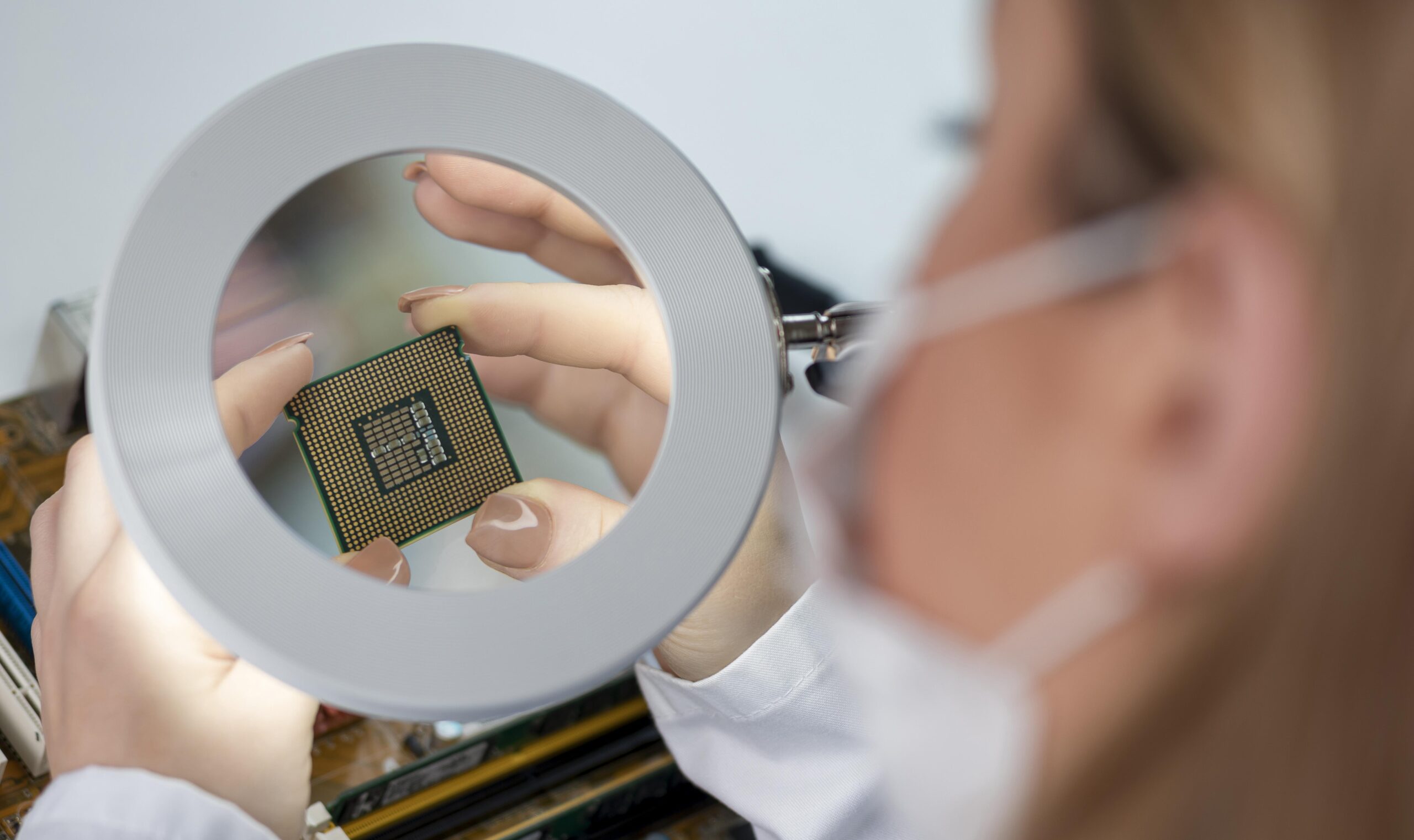
Silicon photonics is the most mature platform for PICs, but silicon’s inherent limitations — poor light emission, high temperature sensitivity, and a fundamental speed bottleneck in conventional modulators — restrict performance for demanding next-generation applications.
Heterogeneous integration addresses this by incorporating specialised materials onto the silicon platform where needed most:
- Thin-film lithium niobate (TFLN) enables ultra-high-speed electro-optic modulation essential for next-generation transceivers.
- Barium titanate (BTO) offers potential for highly efficient, low-power devices at scale.
- III-V semiconductors bring efficient light generation and high-speed photodetection, whilst aluminium nitride (AlN) delivers minimal optical loss for complex light routing.
Material choices must be made with manufacturing in mind from the outset. Integrating these materials introduces process complexity — specialised bonding techniques, tailored etch chemistries, and carefully managed thermal budgets. Trade-offs between optical performance and process readiness must be resolved early, as these decisions have long-term consequences for yield, packaging, and technology transfer.
In this manner, selecting a platform with manufacturability in mind is often what separates a scalable product from a perpetual prototype, underscoring the necessity of translational R&D in the process.
How Translational R&D Accelerates PIC Adoption
Translational R&D is where promising PIC concepts are tested against industrial realities. Process flows refined, integration challenges surfaced, and manufacturability assessed before full-scale commitment.
Working at 300mm wafer scale reveals uniformity and yield challenges that would otherwise only emerge during technology transfer, substantially reducing downstream risk. Advanced simulation frameworks and PDKs enable first-time-right prototyping by accurately predicting device performance before fabrication, reducing costly iteration cycles. Close collaboration between optical designers, fabrication engineers, and system integrators from early development stages further compresses the time from concept to manufacturable platform.
Together, these elements form the foundation that turns translational R&D from a bridge into a genuine accelerant for PIC adoption.
How NSTIC Enables Scalable Photonic Integrated Circuits
The National Semiconductor Translation and Innovation Centre (NSTIC) is Singapore’s national platform for semiconductor and photonics R&D translation, hosted by A*STAR in partnership with local institutes of higher learning, and specifically positioned to address the integration and manufacturability challenges that define the path from PIC concept to industry-ready product.
- 300mm Wafer Cleanroom Fabrication: NSTIC’s cleanroom supports prototyping, process development, and small-volume wafer fabrication across 8-inch and 12-inch wafer formats, aligned with high-volume manufacturing standards.
- Photonic Heterogeneous Integration (PHI): Expert integration of TFLN, BTO, III-V compounds, and AlN onto silicon using high-throughput die-to-wafer (D2W) bonding, followed by wafer-level fabrication using established CMOS processes — ensuring specialised materials are deployed only where their properties are required.
- Photonics Design Enablement (PDE): Advanced simulation frameworks, validated PDKs, and machine-learning-based design methodologies de-risk development and accelerate the design-to-fabrication cycle.
- Electro-Optical Testing: Rigorous testing infrastructure, fully equipped for 200G-per-lane data communication, validates every component against real-world performance benchmarks before scale-up.
- Flexible Engagement Models: Contract research, joint development, and technology licensing offer accessible pathways for companies at any stage of development.
Conclusion: From Integrated Photonics to Industry Impact
PICs are no longer a research curiosity — they are becoming foundational infrastructure for high-speed communications, sensing, imaging, and photonic-electronic co-integration. Yet realising this potential at scale depends on manufacturability, process maturity, and integration readiness as much as optical innovation.
R&D translation ecosystems like NSTIC bridge the gap between research and industry, combining heterogeneous integration expertise, advanced design enablement, and wafer-scale fabrication to help companies move from concept to scalable, deployable platforms with confidence.
Partner with NSTIC to translate your photonic integrated circuit innovations into industry-ready, scalable technologies today.