

Wafer Fabrication: The Foundation of Next-Gen Semiconductor Innovation
In today’s technology-driven world, semiconductors are the invisible engines powering our daily lives, from autonomous vehicles to artificial intelligence. At the heart of semiconductor manufacturing lies wafer fabrication, the precise and complex process that transforms raw semiconductor materials into patterned wafers, the foundation for integrated circuits and photonic devices.
As global demand for smaller, faster, and more energy-efficient chips accelerates, understanding how wafer fabrication works and why it matters is key to grasping the future of modern electronics. In Singapore, the National Semiconductor Translation and Innovation Centre (NSTIC) is pioneering this frontier, combining research excellence with industry-grade fabrication to drive next-generation semiconductor and photonic innovation.
What is Wafer Fabrication and Why It Matters
Wafer fabrication begins with high-purity silicon ingots or alternative semiconductor materials sliced into ultra-flat, mirror-polished wafers. These wafers undergo a series of tightly controlled processes such as lithography, etching, deposition, doping, and bonding; each building nanometre-scale layers that define how the final chip performs.
Precision in every stage of the wafer fabrication process determines a device’s performance, power efficiency, and scalability. Even a microscopic defect can impact billions of transistors on a single wafer.
As the industry pushes beyond the limits of Moore’s Law, innovations like heterogeneous integration, which combines multiple materials or device types on a single chip, are unlocking new possibilities in semiconductor and photonic design.
Core Processes in Wafer Fabrication
Lithography
Lithography defines a chip’s blueprint. Using ultraviolet or electron beams projected through masks, engineers create patterns on photoresist-coated wafers; patterns so fine that some are smaller than a virus. This step dictates the transistor layout, logic density, and ultimately, the device’s computational power.
Etching
Through wet chemical or plasma etching, material is selectively removed from the wafer surface, forming the intricate structures that shape transistors, interconnects, and optical components. Etching precision determines how accurately circuit features are defined.
Thin-Film Deposition
In chemical vapour deposition (CVD) and physical vapour deposition (PVD), ultra-thin layers of metals, insulators, or photonic materials are applied. These films build the multi-layer device architectures that enable modern microchips and integrated photonics.
Doping and Ion Implantation
Controlled introduction of dopants such as boron or phosphorus modifies the wafer’s electrical properties, creating p-type and n-type regions. These define how transistors switch and amplify signals, directly influencing device performance and energy consumption.
Wafer Bonding
Advanced wafer bonding and die-to-wafer (D2W) techniques enable heterogeneous integration, the merging of diverse materials like silicon, lithium niobate (TFLN), or barium titanate (BTO). This process expands functional boundaries, enabling breakthroughs in flat optics, photonics, and quantum technologies.
Innovations in Wafer Fabrication Materials and Techniques
The semiconductor industry is evolving beyond traditional silicon. Wide-bandgap materials such as gallium nitride (GaN) and silicon carbide (SiC) deliver superior power and radio-frequency performance, ideal for electric vehicles, renewable energy, and 5G systems.
At the same time, wafer sizes have scaled from 6-inch to 8-inch and 12-inch (300mm), improving process uniformity and throughput while reducing production costs. These larger wafers form the backbone of today’s high-volume manufacturing.
New frontiers such as flat optics and metalens fabrication are transforming how light is manipulated on a chip, enabling compact, high-resolution imaging and sensing technologies. Enhanced metrology tools, including electron microscopy and spectroscopy, now detect nanoscale defects, improving yield and reliability.
The next frontier includes 2D semiconductors and photonic crystals, further blurring the line between electronics and optics.
NSTIC’s Wafer Fabrication Capabilities and Infrastructure
Located in Singapore, NSTIC operates an industry-grade pilot wafer fabrication facility that bridges cutting-edge research and industrial application. Its Class 10/100 cleanrooms support both 8-inch and 12-inch wafer processing, equipped with advanced lithography, etching, deposition, doping, and bonding tools.
NSTIC’s defining strength lies in its expertise in heterogeneous photonic integration (PHI), combining silicon with advanced materials such as TFLN, BTO, and III-V semiconductors. This capability enables next-generation devices with enhanced optical, electrical, and energy-efficient performance.
Recently, NSTIC expanded its infrastructure with a Gallium Nitride (GaN) fabrication centre, advancing the development of high-performance compound semiconductors essential for power electronics, communications, and sensing applications.
Supporting Innovative R&D and Industrial Translation
NSTIC functions as a translation and innovation hub, accelerating the path from research prototype to small-volume manufacturing. Our fee-for-service and collaborative R&D models give startups, enterprises, and academia access to world-class fabrication equipment and process expertise, without the capital-intensive burden of owning a fab.
Key areas of focus include:
- Developing new process flows for post-Moore photonic and electronic devices
- Exploring GaN, SiC, and emerging semiconductor materials
- Co-designing high-speed, low-power photonic integrated circuits (PICs)
NSTIC also supports IP development and licensing, helping partners move seamlessly from innovation to commercialisation. This model strengthens Singapore’s semiconductor ecosystem and enables international collaboration.
The Strategic Importance of Wafer Fabrication in Singapore’s Semiconductor Ecosystem
Singapore’s semiconductor industry is one of the world’s most advanced, built on a foundation of innovation, infrastructure, and talent. By investing in wafer fabrication in Singapore, the nation enhances its supply chain resilience and accelerates innovation cycles.
NSTIC contributes significantly by fostering hands-on R&D training and developing a pipeline of fabrication and photonics engineers. These initiatives ensure that Singapore continues to lead in advanced semiconductor and photonics R&D while aligning with international standards that facilitate global partnerships and market access.
NSTIC is Paving the Way for Next-Generation Semiconductor Fabrication
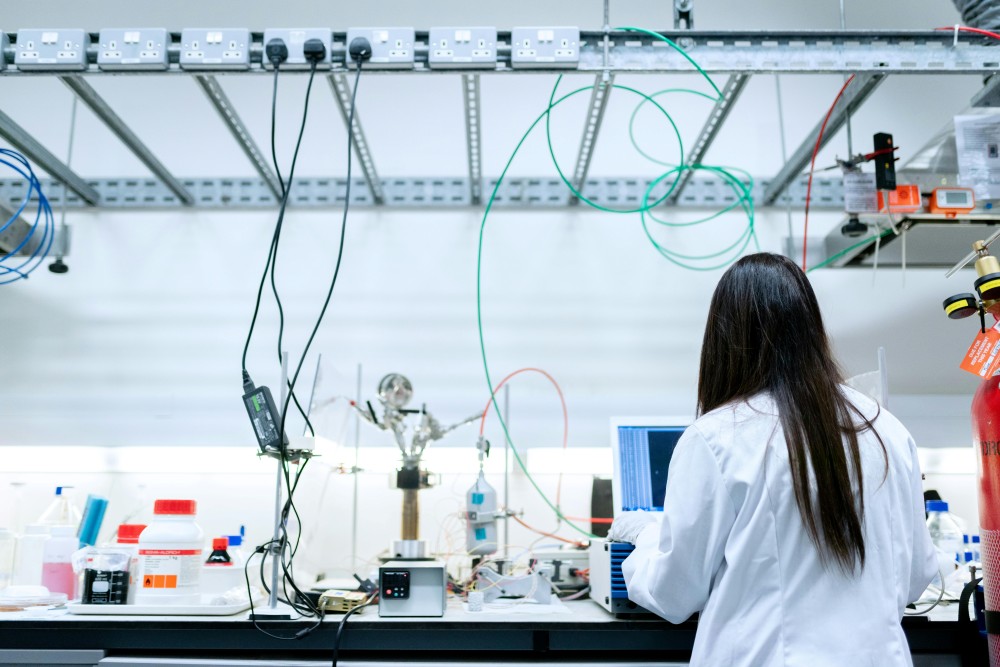
Wafer fabrication remains at the core of semiconductor and photonics advancement. With its state-of-the-art infrastructure, material integration capabilities, and collaborative R&D ecosystem, NSTIC is shaping the next generation of innovation, where electronics and photonics converge seamlessly.
By bridging research and manufacturing, NSTIC empowers industry and academia to explore new materials, architectures, and design paradigms that will define the future of technology, from data centres to healthcare to space systems.
Whether developing high-speed photonic circuits, exploring advanced materials, or scaling prototype devices to production, NSTIC provides the expertise and infrastructure to turn vision into reality.
Contact NSTIC at info@nstic.sg or visit nstic.sg to learn more about our wafer fabrication services and collaboration opportunities.