

Hyperspectral Imaging Systems: From Optical Concepts to Manufacturable Platforms
Hyperspectral imaging has long been recognised for its ability to reveal information beyond what conventional imaging can capture. By analysing light across finely resolved wavelength bands, it offers insights into material composition, biological characteristics, and environmental conditions that are otherwise invisible. Yet for much of its history, this capability has been confined to specialised research instruments rather than practical systems.
Today, that is changing. Advances in photonics, flat optics, and semiconductor fabrication are redefining how hyperspectral imaging systems are designed and built. The focus is shifting from isolated optical performance to integrated, manufacturable platforms that can scale reliably and operate in real-world environments. Understanding this transition, from optical concepts to production-ready systems, is key to unlocking the full industrial potential of hyperspectral imaging.
Why Hyperspectral Imaging Is Moving Beyond the Lab
Hyperspectral imaging offers a richer way of capturing the world by combining spatial information with detailed spectral data across many narrow wavelength bands. This capability enables the identification of materials, chemical signatures, and subtle contrasts that conventional imaging cannot resolve.
Once confined to research environments, hyperspectral imaging is now gaining traction across healthcare, industrial inspection, and sensing applications. In healthcare, it can help distinguish between healthy and malignant tissue during surgical procedures. In manufacturing environments, it enables the identification of material contaminants and defects that are invisible to the human eye. Across environmental and sensing applications, it supports more precise monitoring and analysis.
As these use cases mature, expectations are changing. Hyperspectral imaging systems must now operate reliably outside controlled laboratory settings, often in space-constrained or high-throughput environments. This shift is driving the move away from bulky experimental setups toward compact, robust, and deployable hyperspectral imaging platforms designed for real-world integration.
The Limits of Conventional Imaging Approaches
Traditional RGB and multispectral imaging systems offer limited spectral resolution. While effective for many applications, they cannot capture the fine spectral detail required to distinguish complex materials or subtle biological changes.
Early hyperspectral systems compensated by adding external optics such as prisms, gratings, tunable filters, and mechanical scanning mechanisms. These additions increased system size, alignment complexity, and sensitivity to vibration and environmental variation. As a result, scalability, robustness, and cost-effectiveness became major obstacles to deployment.
These limitations have made it clear that new system architectures are needed to bring hyperspectral imaging into mainstream use.
What Defines a Hyperspectral Imaging System (Briefly)
A hyperspectral imaging system is an integrated optical and electronic platform. Key building blocks include the optical front-end, spectral dispersion or filtering elements, image sensors, and signal readout electronics.
Performance emerges from how these components work together. Spectral resolution, stability, and signal quality are determined not just by sensing elements, but by system-level integration, packaging, and fabrication choices. In practice, hyperspectral imaging is fundamentally a systems engineering challenge.
From Discrete Optics to Integrated Hyperspectral Architectures
Early hyperspectral architectures relied heavily on discrete optical components that were never designed for scale. While they enabled proof-of-concept demonstrations, they limited the pathway to manufacturable products.
The industry is now shifting toward integrated architectures that bring spectral functionality closer to the sensor, or directly onto the chip. This reduces optical path length, improves mechanical stability, and enables wafer-scale fabrication. Integration is becoming the foundation for compact, scalable hyperspectral platforms.
The Role of Integrated Photonics and Flat Optics
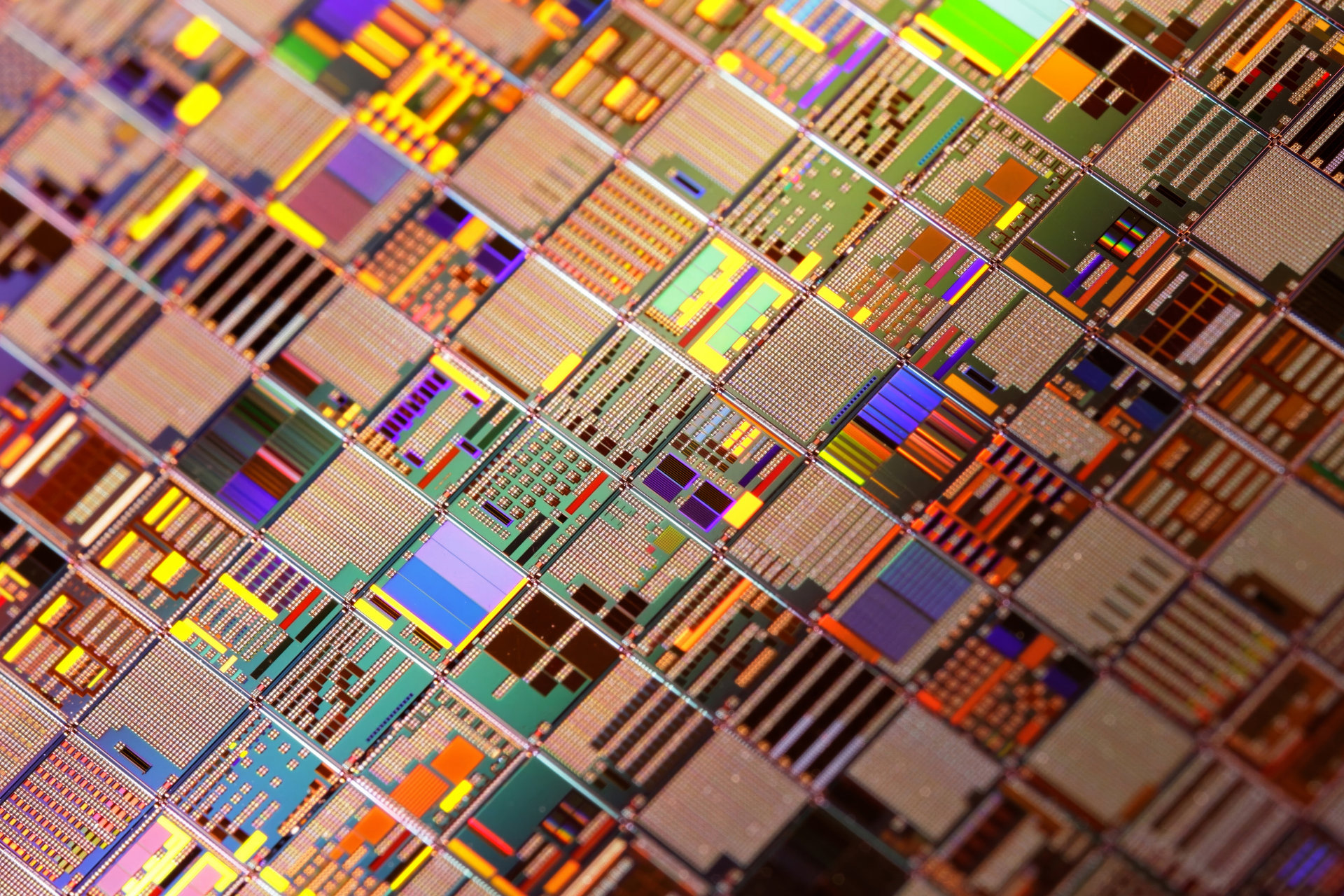
Integrated photonics enables spectral filtering, routing, and manipulation within compact photonic integrated circuits, fabricated using semiconductor processes. This approach improves alignment precision, repeatability, and scalability.
Flat optics and meta-optics further reduce system thickness by replacing conventional lenses with planar, nanostructured surfaces. These elements are inherently compatible with wafer-scale manufacturing and sensor integration. Together, integrated photonics and flat optics are critical enablers for next-generation hyperspectral imaging systems.
Manufacturing Challenges in Scaling Hyperspectral Imaging Systems
Many promising hyperspectral concepts struggle to transition from laboratory demonstrations to manufacturable products. Challenges often emerge during fabrication and integration rather than at the conceptual stage.
Issues such as tight optical tolerances, material compatibility, yield variation, and packaging complexity become apparent at wafer and system levels. Integration with electronics and thermal management further complicates scaling. Addressing these challenges requires early design decisions that prioritise manufacturability.
Why System Manufacturability Matters More Than Raw Performance
For industry adoption, consistency, cost, and scalability often outweigh peak performance. A hyperspectral system must be reproducible, reliable, and compatible with established manufacturing workflows.
As a result, manufacturability has become a primary design constraint. Systems designed with yield, integration, and supply chain considerations in mind are better positioned for commercial success. Manufacturing readiness is now a key competitive differentiator.
Translating Hyperspectral Imaging from Concept to Industry
Bridging the gap between research and deployment requires translational R&D platforms that operate at industry-relevant scales. Access to advanced cleanrooms and wafer-scale fabrication enables realistic prototyping, early yield validation, and faster design iteration.
This approach reduces risk and aligns innovation with manufacturing realities, accelerating the journey from concept to product.
Enabling Collaboration Across the Hyperspectral Ecosystem
Advancing hyperspectral imaging increasingly depends on collaboration across disciplines. Photonics designers, semiconductor engineers, and system integrators must work together from early stages.
Shared infrastructure and co-development models help align design intent with fabrication capability, reducing friction and speeding development across the ecosystem.
How NSTIC Supports the Next Generation of Hyperspectral Imaging Systems
The National Semiconductor Translation and Innovation Centre (NSTIC) is Singapore’s national platform for semiconductor and photonics R&D translation. NSTIC focuses on advancing technologies from proof-of-concept to scalable systems.
Through translational R&D in advanced photonics and flat optics, and access to a 300mm wafer cleanroom for prototyping and validation, NSTIC enables early assessment of manufacturability and integration. Contract research, joint development, and technology licensing further support industry partners in accelerating time-to-market.
NSTIC aims to be a world-leading R&D performer in semiconductors, flat optics, and advanced photonics, supporting companies across Singapore, the U.S., and Europe.
Building Scalable Hyperspectral Imaging for Real-World Impact
Hyperspectral imaging is evolving from a research tool into a deployable technology with real-world impact. This transition is driven by advances in integration, manufacturing, and system-level design.
As the field matures, success will depend on building hyperspectral systems that are scalable, robust, and manufacturing-ready. Translational R&D platforms like NSTIC play a crucial role in enabling this shift, helping hyperspectral imaging technologies move confidently from the lab into real-world applications across industries.